
Ethereum is attracting renewed attention from some of Wall Street’s largest financial institutions as BlackRock, JPMorgan, and other major firms participate in a high-profile institutional forum in London today. The event places Ethereum’s expanding role in global finance under the spotlight, particularly as banks and asset managers explore tokenization, blockchain settlement, and new ways to move traditional financial assets on-chain.
The Ethereum Institutional Forum, taking place on November 12, brings together representatives from major financial institutions and blockchain infrastructure providers.
For Ethereum, the gathering represents another opportunity to demonstrate how its technology could support financial services beyond cryptocurrency trading.
BlackRock And JPMorgan Take Center Stage At Ethereum Forum
According to the official event agenda, the Ethereum Institutional Forum features discussions involving BlackRock, JPMorgan, Standard Chartered, Vanguard, Citi, and other prominent financial organizations.
The event is being held at the Kimpton Fitzroy London and focuses on the future of institutional finance on public blockchain networks.
One of the most anticipated sessions is scheduled for 3:00 PM London time, when BlackRock’s Director of Digital Assets, Nikhil Sharma, is set to discuss public blockchains.
Earlier, JPMorgan’s Emma Landriault, Global Head of Kinexys Labs and JPM Coin, is scheduled to participate in a discussion about moving money on-chain.
The session will examine liquidity, cash management, and deposit tokens, areas where blockchain technology could improve existing financial infrastructure.
Meanwhile, Standard Chartered’s Geoffrey Kendrick is among the speakers scheduled to discuss Ethereum’s role in institutional finance.
These discussions highlight how traditional financial institutions are increasingly evaluating blockchain infrastructure for practical financial applications.
Importantly, participation in the forum does not necessarily indicate that the institutions are announcing new investments or partnerships.
However, the presence of senior representatives suggests that Ethereum remains an important part of the broader institutional blockchain conversation.
Why Wall Street Is Exploring Ethereum Infrastructure
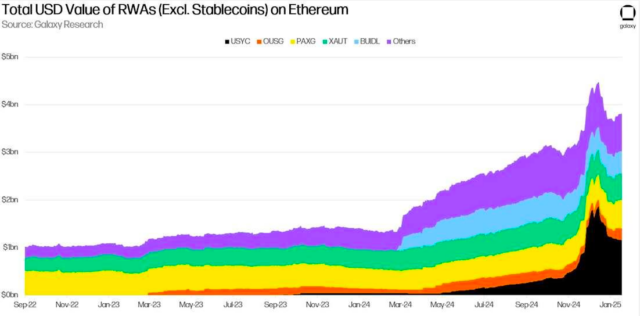
One of the most interesting developments in institutional finance is the growing interest in tokenizing traditional assets.
Tokenization allows financial instruments such as bonds, money market funds, and other securities to be represented digitally on blockchain networks.
For institutions, the potential benefits include faster settlement, improved transparency, and more efficient collateral management.
Ethereum has become a significant platform for tokenization because of its smart contract capabilities and established developer ecosystem.
Earlier this year, Bitcoinist reported that JPMorgan launched a tokenized fund using Ethereum infrastructure, demonstrating how major financial institutions are beginning to adopt public blockchain networks for investment products.
BlackRock has also expanded its involvement in tokenization.
As previously reported, BlackRock CEO Larry Fink discussed the potential advantages of a common blockchain for financial markets, arguing that tokenization could reduce transaction costs and improve efficiency.
Although Fink did not specifically endorse Ethereum as the only suitable network, his comments demonstrated how seriously major asset managers are evaluating blockchain infrastructure.
We believe this development is particularly important because Ethereum’s long-term value proposition extends beyond speculative cryptocurrency trading.
As financial infrastructure gradually moves on-chain, networks capable of supporting secure transactions and programmable assets could become increasingly relevant.
Ethereum’s Roadmap And Security Take Priority
The London forum is not focused exclusively on financial products.
Ethereum researchers are also scheduled to discuss the network’s technical development, including its roadmap through 2030.
Ethereum Foundation researcher Justin Drake is expected to present the network’s post-quantum security roadmap.
Meanwhile, Ansgar Dietrichs is scheduled to discuss the Strawmap, a long-term technical roadmap covering Ethereum’s future development.
These topics are especially relevant to financial institutions considering blockchain infrastructure for long-term use.
Banks and asset managers require networks that can maintain security, reliability, and operational continuity over extended periods.
Post-quantum security has therefore become an important research area as developers evaluate how future advances in computing could affect existing cryptographic systems.
For Ethereum, continued improvements in scalability and security could strengthen its position as infrastructure for institutional applications.
Could Institutional Adoption Support ETH Demand?
Although institutional interest in Ethereum is growing, the relationship between blockchain adoption and ETH price performance remains complex.
Ethereum’s native cryptocurrency is used to pay transaction fees and help secure the network through staking.
As more financial applications operate on Ethereum, additional network activity could increase demand for these services.
However, institutional adoption does not automatically translate into proportional ETH price appreciation.
Some institutions may use Ethereum-based infrastructure without maintaining significant direct ETH exposure.
Others may rely on Layer 2 networks, where transaction costs and settlement mechanisms differ from activity directly on Ethereum’s mainnet.
BlackRock’s expansion of its BUIDL fund to Arbitrum illustrates how institutional products are beginning to use Ethereum-compatible scaling networks.
This could become increasingly important as institutions seek lower transaction costs without abandoning Ethereum’s broader ecosystem.
Nevertheless, greater institutional participation could support Ethereum’s development by attracting financial products, developers, and additional liquidity.
We believe the most important long-term indicator will be whether institutional projects move beyond testing and begin generating sustained transaction activity.

What Comes Next For Ethereum?
The Ethereum Institutional Forum provides an opportunity for financial institutions to discuss the next stage of blockchain adoption.
BlackRock’s session on public blockchains and JPMorgan’s discussion of tokenized money could offer additional insight into how major financial firms view Ethereum’s future.
The event also includes discussions about tokenized asset trading, settlement, custody, and institutional ETH.
For investors, the key question is whether growing institutional engagement will eventually translate into measurable adoption.
We will be watching for official announcements, new deployments, and evidence of expanding on-chain financial activity.
While a conference alone cannot determine Ethereum’s price direction, the participation of major Wall Street institutions highlights the network’s continuing relevance to the future of financial infrastructure.
If institutional adoption continues to develop, Ethereum could play an increasingly important role in connecting traditional finance with blockchain-based markets.

You can get bonuses upto $100 FREE BONUS when you:
💰 Install these recommended apps:
💲 SocialGood - 100% Crypto Back on Everyday Shopping
💲 xPortal - The DeFi For The Next Billion
💲 CryptoTab Browser - Lightweight, fast, and ready to mine!
💰 Register on these recommended exchanges:
🟡 Binance🟡 Bitfinex🟡 Bitmart🟡 Bittrex🟡 Bitget
🟡 CoinEx🟡 Crypto.com🟡 Gate.io🟡 Huobi🟡 Kucoin.















Comments